Rewrite the opening reflection
Make the opening specific to the situation instead of keeping a vague apology. Use a short sentence that acknowledges the conversation or action you should have handled better.
TEMPLATE DETAILS
A quiet rainy-window apology letter that says what words couldn't.
This rainy-window apology has a reflective, story-like structure. Use it to explain what you should have said, what you learned and what you are prepared to change.
Step-by-step guide to create this template →WHAT YOU CAN CUSTOMIZE
Make the opening specific to the situation instead of keeping a vague apology. Use a short sentence that acknowledges the conversation or action you should have handled better.
Review the sections about listening, being right and small things. Replace abstract claims with one clear behavior you will practice, such as listening without interrupting or following through on a promise.
The closing should not demand an immediate response. Preview the full sequence and ensure the message gives the recipient room to feel what they feel.
From the Template Library, open “Sorry” and choose “Use template”. Sign in when asked. If the editor reopens an existing draft for this template, check that it is the one you intended to continue.
Click a highlighted text, image, video, audio item or button on the canvas to open its editor. Replace the visible sample content with your own. If an item does not open an editing panel, do not assume that it is an editable control in this template.
Use photos and videos you have permission to share. Check image crops, captions, video sources and any profile or destination links that you changed. Never publish private details that should not be visible to anyone with the public link.
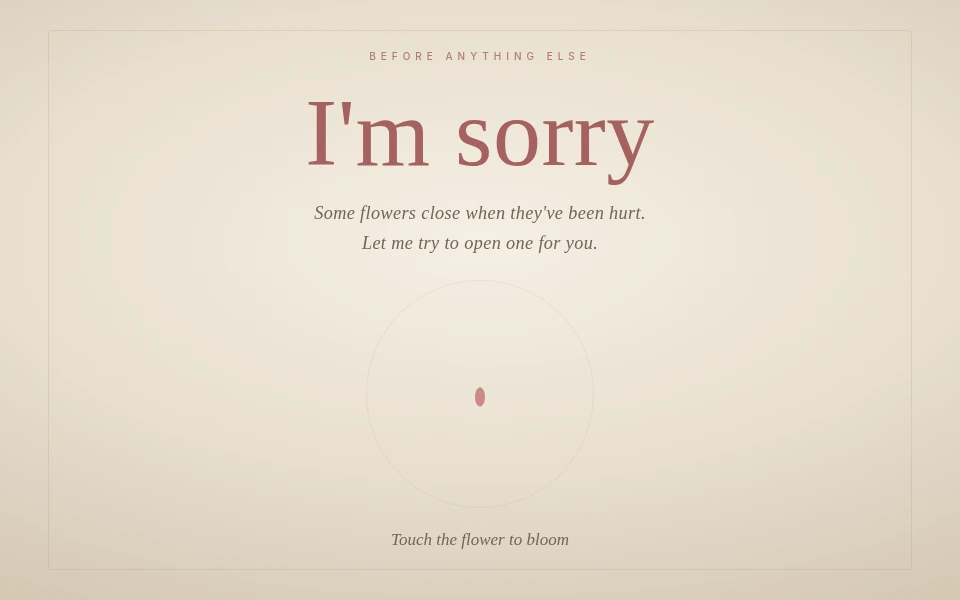
Open the Sorry template, replace the sample text with your own honest words, and publish. The recipient reads it in a calm rainy-window scene.
MORE LETTER
 💌 Love Letter
 🌙 Midnight Love
 🌸 Sorry Letter 2